Endoscopic Breast Augmentation: Why Surgeons See More Clearly During Surgery
Many women worry that after breast implant placement they may experience prolonged bruising, firm breasts, asymmetry between the two sides, or an incision that leaves an unsightly scar. Most of these fears trace back to one point rarely explained clearly: when the implant pocket is dissected without direct visualization, the surgeon is forced to perform much of the work by feel alone. Endoscopic breast augmentation was developed to address exactly this weakness, bringing light and a magnified image into the deep tissue pocket that is difficult for the naked eye to reach.
The science behind endoscopic breast augmentation
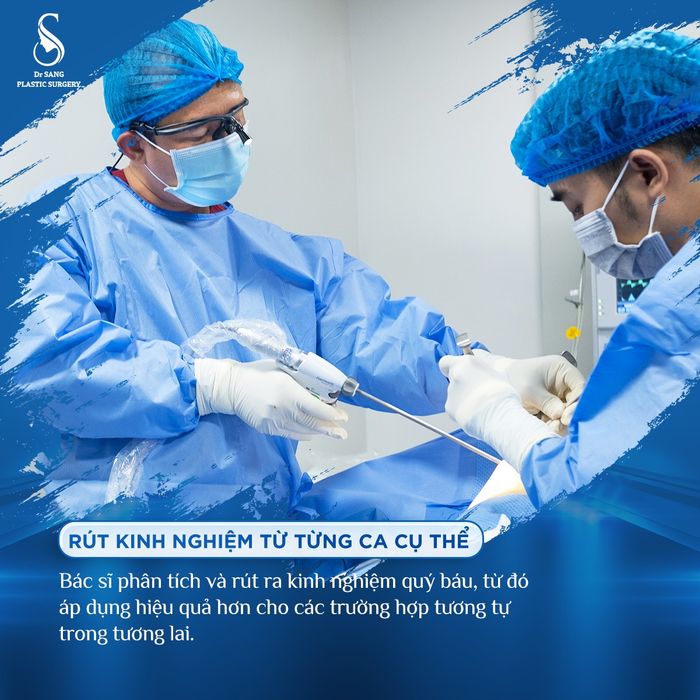
In breast implant surgery, the surgeon needs to create a pocket to hold the implant, located beneath the mammary gland or beneath the pectoralis major muscle. This pocket lies deep, close to the perforating vascular bundles and the network of vessels that supply the tissue. With endoscopic breast augmentation, a small camera scope is introduced through the incision and transmits a magnified image to a monitor. This allows the surgeon to see each blood vessel and each fascial layer clearly, instead of working in an area hidden from view.
When the structures are clearly visible, the surgeon can apply selective cautery for hemostasis right at the bleeding point rather than performing blunt dissection. This is a meaningful technical difference that helps reduce hematoma and seroma and can shorten recovery compared with working purely by hand.
Endoscopic breast augmentation helps place the implant in the correct anatomical layer
A harmonious result depends on the implant sitting in the correct position and the correct layer. The inframammary fold is the anatomical landmark that determines whether the breast shape looks natural. When dissection is performed under endoscopic visualization, the surgeon can control the boundaries of the pocket, reducing the risk of the implant dropping too low or the two sides being uneven.
With the subpectoral technique, the release of the muscle attachment must be performed precisely so the breast looks soft while still providing good support. Endoscopy allows this step to be performed more neatly and helps the surgeon assess symmetry during the operation itself. Specific results still depend on individual factors and require a direct examination to evaluate.
The practical benefits of endoscopic breast augmentation
Because the access point can be placed in a discreet area such as the inframammary fold or the areola, the scar tends to sit in an easily concealed location. Careful hemostasis under the camera contributes to less bruising and less swelling in the surgical area during the first few days, which is why many people return to light activities sooner.
- Magnified visualization helps dissect the implant pocket clearly, limiting injury to healthy tissue.
- Selective hemostasis contributes to reducing post-operative seroma and hematoma.
- Control of the inframammary fold and side-to-side symmetry during the operation itself.
- The incision is placed in a discreet location, creating conditions for the scar to fade over time.
It must be emphasized: endoscopy is a tool that aids visualization, not a miracle that replaces the right indication and the surgeon's skill. The person directly holding the instruments remains the deciding factor.
Understanding it correctly to avoid misconceptions
Many people believe that endoscopy means they will never need revision surgery, or that the implant will stay unchanged forever. In reality, a breast implant is a medical device with a lifespan and requires periodic monitoring; capsular contracture can still occur even though the rate is reduced with good technique. Another misconception is to think that a small incision means there is no scar at all. Every skin incision leaves a scar; what the surgeon can do is place it in a discreet location and care for it so the scar fades over time, but it cannot be completely erased.
Medical considerations before endoscopic breast augmentation
This is an invasive surgery, so screening of your individual health profile is mandatory. Some cases that need careful consideration or postponement include: being pregnant or breastfeeding, having an active infection, uncontrolled coagulation disorders, unstable cardiovascular disease or diabetes, and suspicious breast findings that have not yet been clarified. People with a history of keloid scarring also need thorough counseling.
After surgery, some reactions are within normal limits and will gradually subside: swelling, mild bruising, a feeling of tightness in the chest, breasts sitting slightly high and firm for the first few weeks before the implant settles, and temporary changes in sensation around the nipple area. However, if there is high fever, rapidly increasing redness and swelling, severe pain, or abnormal discharge, you should contact your doctor immediately. Attending follow-up appointments on time and wearing the prescribed support garment are indispensable parts of the recovery process.
Factors affecting cost and transparency
The cost of endoscopic breast augmentation depends on many factors: the type and brand of implant chosen, the placement technique suited to your individual profile, the complexity of the case, as well as the sterile and anesthesia conditions at the medical facility. At our unit, every item is presented clearly before any decision is made, so you understand what you are paying for. The Mentor and Motiva (Ergonomix 2) implants we use are genuine and FDA-certified.
Conclusion and invitation to consult
Endoscopic breast augmentation is a reasonable technical advance because it returns to the surgeon the most important thing in surgery: the ability to see clearly what they are doing. But a tool only delivers its value when paired with the right indication, a suitable individual profile, and a surgeon who accompanies you directly. Results always depend on each individual and need a direct examination for an accurate evaluation.
If you are considering endoscopic breast augmentation, please register for a free consultation and individual health screening with a specialist surgeon for an honest analysis of the option that suits you.
Dr. CKI Vo Thanh Sang — Specialist Level I in Plastic and Aesthetic Surgery, with over 15 years of experience, having accompanied more than 12,000 clients. Head of the Plastic and Aesthetic Surgery Unit at World Wide Hospital. License 050864/HCM-CCHN. Address: 244A Cong Quynh, District 1, Ho Chi Minh City. The doctor personally examines, advises and performs surgery in a hospital environment that meets standards.
Hotline: 079 7479 222